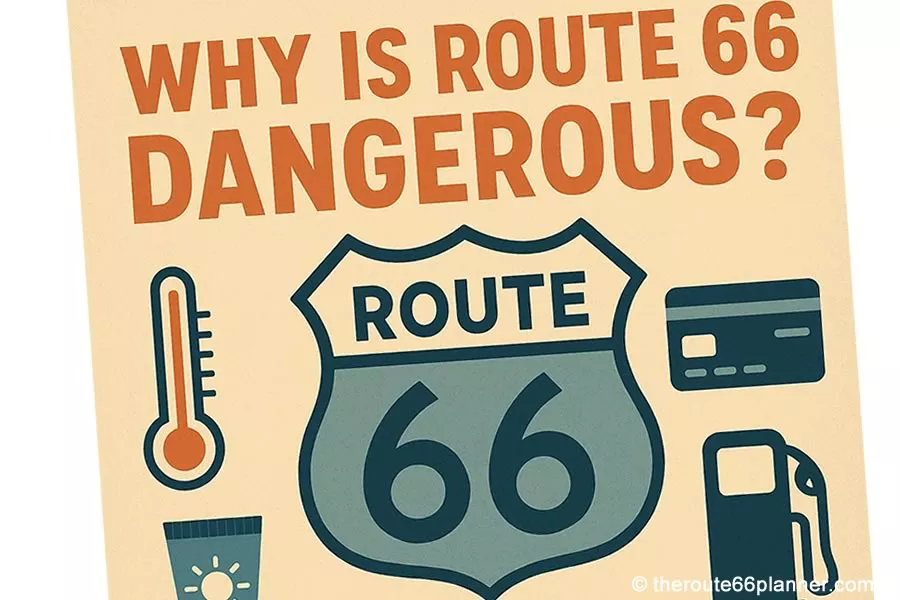
Why Is Route 66 Dangerous?
NO, Traveling Route 66 isn't inherently dangerous 🚗—but lack of preparation can turn it risky. With proper planning and awareness, this legendary journey becomes unforgettable—for all the right reasons.
1. Extreme Weather & Environment
- Summer heat: Temperatures in deserts (Arizona, New Mexico) can soar past 40 °C (104 °F). Without AC, hydration, electrolytes, hats and sunscreen, heatstroke and dehydration are real threats.
- Winter cold: Some sections, especially in higher elevations, can dip below freezing and see occasional snow or ice. Don’t travel without warm clothing, blankets, and proper driving gear. For best timing, check both the best time to drive Route 66 and the month‑by‑month weather guide, but be prepared for extremes year‑round.
2. Long, Remote Distances
- Fuel pitfalls: You can go 100 km+ without a service station—or arrive to find it closed. Always fill the tank when you can.
- Cell signal gaps: Remote stretches might have little or no mobile coverage. Download offline maps and carry a paper map backup.
3. Vehicle & Rental Risks
- Unreliable rentals: Avoid deals from private individuals or shady agencies. Such rentals may have hidden fees, no insurance, lack roadside assistance, or worse. Sticking with reputable companies is safer—see tips in this rental guide.
- Rental scams: Watch out for phony websites, fake phone numbers, gift‑card demands, hidden cleaning fees, or post‑trip damage claims. Always pay by credit card, inspect and photograph the car before & after pickup, and carefully check contracts.
4. Financial & Fraud Concerns
- Card skimming: Gas stations and ATMs along Route 66 can be vulnerable. Criminals sometimes tamper with card readers.
- Unauthorized transactions: Monitor your card using notifications. If you spot fraud, act fast—block the card and contact your bank immediately.
Your experience of detecting and refunding fraudulent charges through your bank’s app highlights how vigilance pays off.
Personal tip from the road:
“During our trip, we personally experienced what can happen if you're not constantly monitoring your card. Thanks to the app connected to our card, we immediately noticed two unauthorized charges. We quickly blocked the card and contacted our bank — they confirmed both were fraudulent and refunded us in full. The scammers even tried a third transaction, but since the card was already blocked, they failed.This showed us how important it is to activate payment notifications and check your balance regularly while traveling. It takes just a moment, but it can save you from major losses.”
5. Road & Traffic Hazards
- Night driving risks: Desert highways are poorly lit, and wildlife (deer, coyotes) may cross. Fatigue is common. TripAdvisor users recommend avoiding night‑time driving.
- State‑specific rules: In some states you can turn right on red; in others, it's forbidden. Signs are usually clear—just pay attention.
6. General Travel Safety
- Crime & petty theft: Keep valuables out of sight, lock your car, and avoid isolated areas after dark.
- Health preparedness: Bring sunscreen, first‑aid items, plenty of drinking water, and snacks. A basic map and a torch (flashlight) are handy backups .
- Wi‑Fi risks: Be cautious with public network use—avoid banking or sensitive tasks unless on a secure connection .
✅ How to Travel Safely & Smoothly
| Risk Area | Preparation & Best Practices |
|---|---|
| Weather | Check seasonal forecasts (Best Time & Monthly Weather) and pack accordingly (AC, sun gear, layers, blankets) |
| Fuel & Distances | Refuel early, carry jerrycans, download offline maps |
| Vehicle Rental | Use reputable agencies, inspect/photograph vehicle, document mileage/fuel, pay by credit card |
| Credit Card Safety | Monitor transactions, use chip/tap, check card readers, call bank on anomalies |
| Driving Hazards | Avoid night driving, obey turn‑on‑red rules, watch for wildlife |
| Crime & Health | Secure belongings, carry first‑aid, sunscreen, water, snacks, use a basic flashlight |
| Communication | Share your route with someone, carry paper maps, get travel insurance |
Final Words: Route 66 Is Not Scary—It’s Epic!
Route 66 may span rugged landscapes and long empty roads, but with preparation it becomes a safe and joyous adventure. The risks are manageable: just stay alert, plan ahead, and stay equipped. With those in mind, the Mother Road unfolds into a transformational journey—one filled with classic diners, quirky towns, beautiful vistas, and lifelong memories.
Further Reading & Recommended Links
- Good time to travel + weather guide ▸ Best Time & Monthly Weather
- How to rent a car safely ▸ Route 66 Rental Guide